Summary:
The seven garage door problems that require immediate attention include broken springs, doors stuck open, damaged cables, off-track doors, opener failures, damaged panels, and faulty safety sensors. Learn the warning signs, understand the risks to your home and family, discover what to do while waiting for repairs, and find out when to call for emergency garage door repair Chicago to restore your garage door’s safety, security, and reliable operation.
Introduction
A malfunctioning garage door is more than an inconvenience—it can put your home’s security and your family’s safety at risk. Whether your garage door suddenly gets stuck open, makes a loud banging noise, or refuses to close during a Chicago snowstorm, knowing when to seek professional help can prevent further damage and costly repairs. Chicago’s harsh winters, freezing temperatures, and fluctuating weather can also put extra strain on garage door springs, cables, tracks, and openers.
So, when should you call for emergency garage door repair Chicago services? In this guide, we’ll cover seven garage door problems you should never ignore, the warning signs to watch for, and what to do when your garage door needs urgent professional repair.
The 7 Garage Door Issues You Need to Repair ASAP
Your garage door is composed of many moveable parts that work together, often grinding against each other. Over time, these parts wear down and affect other components, resulting in abrupt damages and major malfunctions that happen right when you need to take your car out.
The following are just some of the most common problems you wouldn’t want to overlook.
1. Broken Garage Door Springs
Torsion springs are typically mounted on a metal shaft above the garage door. They store energy by twisting as the door closes and release that energy to help lift the door when it opens. Extension springs, on the other hand, are usually installed along the horizontal tracks on either side of the door. They stretch as the door closes and contract to assist in lifting it.
Both spring types are essential for safe, controlled garage door operation. When a spring breaks or wears out, the door can become extremely heavy, move unevenly, or refuse to open altogether. A faulty spring can also put additional strain on the garage door opener and other components. Because these springs operate under significant tension, never attempt to repair or replace them yourself.
Warning signs:
- A loud bang coming from the garage.
- A garage door that feels unusually heavy or will not open.
- A visible gap in the torsion spring.
- The door opened only a few inches before stopping.
2. Garage Door Stuck Open or Unable to Close
A malfunctioning door exposes vehicles, tools, bicycles, and stored items to rain, snow, wind, and debris. In Chicago, freezing temperatures, ice, and winter storms can make the situation even more concerning, potentially damaging belongings and allowing cold air into your garage.
Warning signs:
- Damaged cables,
- Broken springs,
- Misaligned tracks,
- Faulty opener.
3. Frayed, Broken, or Loose Garage Door Cables
Garage door cables work alongside the springs to help lift and lower the door safely and evenly. They transfer the springs’ force to the door, keeping both sides balanced and ensuring smooth, controlled movement. When a cable becomes frayed, loose, or broken, the door may become uneven, get stuck, or suddenly drop, creating a serious safety risk.
Warning signs:
- Loose or hanging cables.
- A crooked or uneven door.
- Grinding noises during operation.
- A door that suddenly drops or gets stuck.
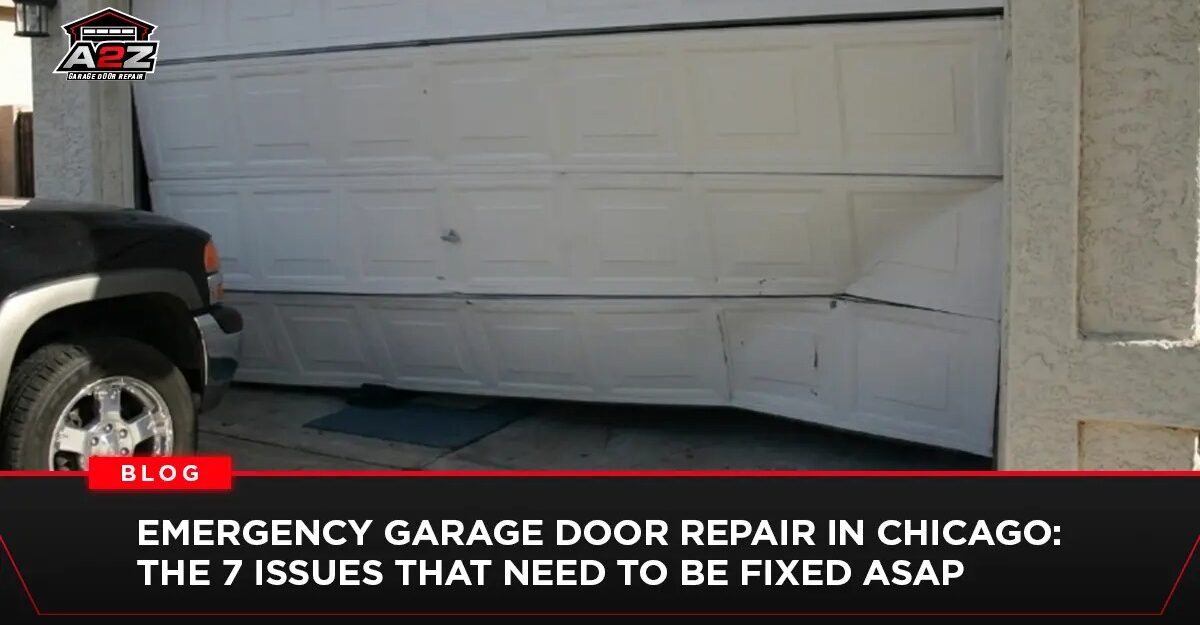
4. Garage Door Off Its Tracks
Garage door rollers can slip out of their tracks when a vehicle hits the door, rollers become worn or damaged, or loose hardware causes the tracks to shift out of alignment. Broken or loose cables can also make the door uneven, forcing the rollers out of position as the door moves. When this happens, the door may become crooked, jam, or get stuck halfway open, creating a potential safety hazard.
Warning Signs:
- Crooked or uneven door
- Rollers out of the tracks
- Loud grinding or scraping noises
- Visible gaps between rollers and tracks
- Bent or misaligned tracks
- Door stuck halfway
- Excessive shaking or wobbling
- Door hanging at an unusual angle
5. Garage Door Opener Failure That Leaves You Trapped or Exposed
A malfunctioning garage door opener can disrupt a homeowner’s daily routine, especially when they cannot get their car out for work, school, or important appointments. If the door gets stuck open, it can also create anxiety about break-ins, stolen belongings, and the safety of family members.
Chicago averages around 28 days of snow per year, so an open or improperly closed garage may let freezing air and snow inside, making the space uncomfortable and potentially affecting nearby areas of the home.
Warning Signs:
- The motor runs, but the door does not move.
- The remote or wall control stops responding.
- The opener makes unusual noises.
- The door reverses unexpectedly or stops mid-cycle.
6. Damaged Garage Door Panels or Severe Impact Damage
A vehicle collision can dent, bend, or crack garage door panels, while falling objects, such as tree branches or heavy tools, can cause similar damage. Severe weather, including strong winds, hail, and heavy snow, can also warp panels, create dents, or weaken the door’s structure.
Warning Signs:
- Bent sections
- Cracked panels
- Misaligned hinges
- Failure to close properly.
7. Garage Door Safety Sensor or Reversal System Failure
Photo-eye sensors use an invisible infrared beam across the garage door opening to detect people, pets, or objects in the door’s path. If something interrupts the beam while the door is closing, the system typically signals the door to stop and reverse direction.
Automatic reversal mechanisms provide an additional layer of protection by making the door reverse when it encounters an obstruction or excessive resistance. Together, these safety features help prevent injuries, protect vehicles and belongings, and reduce the risk of accidents.
If either system fails, have it inspected and repaired promptly, and avoid using the door until safe operation is restored.
Warning Signs:
- The door closes only while the wall button is held.
- The door reverses for no apparent reason.
- Sensor indicator lights remain off or blink.
- The door fails to reverse when an obstruction is detected.
When Should You Call for Emergency Garage Door Repair in Chicago?
Not every garage door problem requires emergency or after-hours service. Minor issues, such as a noisy roller, a slow remote, or cosmetic dents, can often wait for a scheduled repair if the door remains safe and secure.
However, problems like broken springs or cables, a door stuck open, severe track misalignment, or a malfunctioning safety system can pose immediate risks to people and property. In these situations, delaying repairs may worsen the damage or compromise your home’s security.
Here’s a quick list of scenarios that warrant immediate attention:
- The garage door is stuck open, leaving the home or business unsecured.
- A spring or cable has broken, making the door unstable.
- The door has come off its tracks or is hanging unevenly.
- The door has sustained major impact damage.
- A safety system has failed, creating an immediate risk of injury.
- A vehicle is trapped and access is urgently needed.
Why Chicago Homeowners Shouldn’t Delay Emergency Garage Door Repairs
When it comes to fixing a sudden garage door issue, time is of the essence. Every delay could add up and cause the system to falter and totally fail. Take these factors into account as you look for an emergency garage door repair service.
- Changing weather conditions: Snow, ice, and freezing temperatures can complicate access and worsen certain mechanical issues.
- Home security concerns: A garage door that will not close can expose the home and stored belongings.
- Risk of further damage: Continued operation may damage the opener, tracks, rollers, and other components.
- Family and property safety: Unstable doors and defective safety mechanisms can create serious hazards.
- Unexpected disruptions: A malfunctioning door can interfere with commuting, deliveries, and daily routines.
How to Choose a Reliable Emergency Garage Door Repair Company in Chicago
Searching for a Chicago emergency garage door repair service shouldn’t push quality to the sidelines. Not every company you find on the search engine results will deliver the results you want. Do a deep dive before committing so you won’t risk fixing recurring issues, paying for more expensive repairs, and getting low-quality outcomes.
With that, here are a few tidbits to keep in mind:
- Look for a provider that offers genuine emergency or after-hours service.
- Confirm service coverage for your Chicago neighborhood.
- Ask for an estimate, including emergency call-out fees and parts costs.
- Check customer reviews and relevant experience.
- Verify that technicians inspect the underlying cause rather than simply treating the visible symptom.
- Ask about warranties on replacement parts and labor.
- Confirm the expected arrival window and whether the company can handle your specific issue.
Takeaway
Garage door problems can quickly become safety and security concerns, especially when broken springs, damaged cables, off-track doors, or faulty safety sensors prevent proper operation.
If you notice any serious warning signs, avoid attempting risky DIY fixes and contact a trusted professional for emergency garage door repair Chicago services to protect your property, prevent further damage, and restore your garage door’s safe and reliable operation.
A2Z Garage Door Repair provides same-day service when you call for an urgent troubleshoot, replacement, or fix. If your garage door is stuck open, has come off its tracks, or shows signs of a broken spring or cable, don’t wait for the problem to get worse. We service, Call us now or request a quote.
Frequently Asked Questions About Emergency Garage Door Repair in Chicago
1. How do I know if my garage door needs emergency repair?
Explain the main red flags: a door that is unstable, stuck open, off its tracks, or unable to operate safely because of a broken spring, cable, or safety mechanism.
2. Can I open my garage door if the spring is broken?
Explain why manually lifting the door is dangerous because it may be extremely heavy and difficult to control.
3. How quickly can an emergency garage door technician arrive in Chicago?
Explain that arrival times depend on location, weather, technician availability, and the severity of the issue. Encourage readers to confirm the estimated arrival time when calling.
4. Is emergency garage door repair more expensive than regular service?
Discuss possible after-hours fees, diagnostic charges, replacement parts, and labor costs. Recommend requesting a clear estimate before work begins.
5. Can Chicago’s winter weather cause garage door problems?
Explain how ice buildup, temperature changes, and cold-weather effects on lubricants or mechanical components can contribute to malfunctions.
6. Should I repair or replace a damaged garage door?
Explain that the decision depends on the extent of the damage, the door’s age, its structural condition, and the cost of repairs.